Sensitive Skin During Menopause: Causes, Triggers and Care Tips

Area
Daily UseKey Takeaways:
- The barrier is thinner: Decreased estrogen leads to a reduction in skin density, making it easier for irritants to penetrate and reach nerve endings.
- pH levels fluctuate: Menopausal skin often becomes more alkaline, which disrupts the “acid mantle” and its ability to defend against sensitivity.
- “Inflammaging” plays a role: Lower hormone levels can lead to low-grade systemic inflammation, manifesting as facial flushing or reactivity.
- Routine simplification is essential: Removing harsh surfactants and synthetic fragrances is the fastest way to calm a reactive menopausal barrier.
It is a common and often startling experience: the skincare routine you’ve used for a decade suddenly starts to sting. Perhaps your skin feels uncomfortably tight after a shower, or you’ve developed a persistent redness that won’t settle. This shift into “reactive” territory is a sign of the menopausal transition, where skin that was once resilient becomes fragile and easily provoked.
We know that sensitive skin isn’t just about “surface” irritation. It is a biological response to the thinning of your skin layers and a shift in your natural pH levels. Understanding how to support your barrier is the key to maintaining comfort during this time.
Why is my skin suddenly so sensitive during menopause?
The primary reason for increased sensitivity is the “atrophy” or thinning of the epidermis. Estrogen is responsible for the production of collagen and lipids that keep the skin’s surface “plump” and sealed. As these levels drop, your skin essentially loses its protective padding.
This thinning means that the nerve endings in your skin are closer to the surface. Things that were once blocked by a healthy barrier, such as pollutants, wind, or active skincare ingredients, now cause a stinging or burning sensation. To learn more read our Menopause & Skincare Guide.
What are the most common triggers for menopausal skin sensitivity?
When your skin barrier is “leaky,” common daily elements become potential triggers. During menopause, your skin’s threshold for irritation is much lower. Key triggers include:
- Fragrance and Essential Oils: These are common allergens that can trigger a red, itchy response on thinned skin.
- Harsh Surfactants (like SLS): Traditional foaming cleansers strip away the few natural oils your skin is still producing.
- Temperature Extremes: Hot water is particularly damaging, as it melts away protective lipids and increases facial flushing.
- Environmental Shifts: Wind and low humidity can cause “micro-cracks” in the skin, leading to immediate sensitivity.
If you are also experiencing an intense “crawling” sensation along with this sensitivity, you may find our article on Why Menopause Causes Dry, Itchy Skin (And What Helps) useful.
How can I simplify my routine to calm reactive menopausal skin?
The most effective way to manage sensitivity is to adopt a “barrier-first” mindset. This means stripping your routine back to the essentials: a gentle, soap-free cleanser and a high-performance, tested emollient.
Avoid “over-treating” the skin with too many active ingredients at once. While you might want to address wrinkles or pigmentation, your skin cannot handle aggressive treatments if the barrier is currently compromised. Supporting the skin’s natural pH and lipid levels should be your first priority. This is especially true for those dealing with specific skin conditions; read more in Menopause, Eczema and Psoriasis: Why Flare-Ups Can Worsen.
Which ingredients help support a fragile menopausal barrier?
You need ingredients that provide a “second skin” effect, mimicking the natural oils your body is producing less of. Look for:
- Urea: In lower concentrations, it acts as a gentle humectant that hydrates without irritation.
- Ceramides: These are the “bricks” of your skin barrier that help seal in moisture.
- Glycerin: A classic, non-irritating humectant that is perfect for reactive skin.
To learn more about what to look for on a label, see our guide: Best Skincare Ingredients for Menopausal Skin (And What to Avoid).
What is the best skincare routine for sensitive menopausal skin?
The Dermal Therapy Sensitive Care Routine
Managing reactive skin requires formulations that are clinically tested for sensitivity and free from common irritants.
- The Foundation: Dermal Therapy Sensitive Skin Wash is a soap-free and SLS-free formula that cleanses without disrupting the skin’s natural pH or stripping away vital lipids.
- For Facial Reactivity: Dermal Therapy Face & Eyelid Eczema Cream is a gentle, steroid-free option that is specifically tested for use on the most delicate facial skin, helping to soothe redness and repair the barrier.
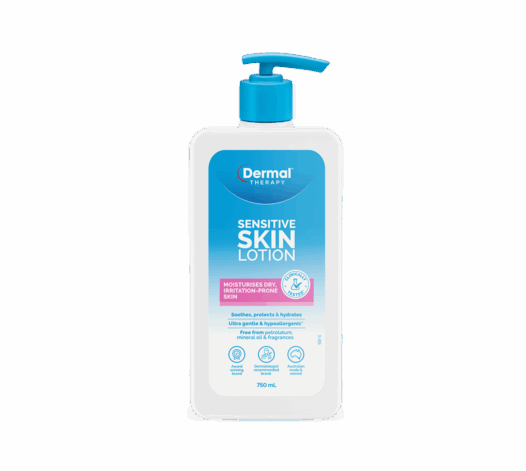
- All-Over Body Support: Dermal Therapy Sensitive Skin Lotion offers deep hydration in a light, non-greasy formula that is ideal for daily use on reactive menopausal skin.