Do Pimple Patches Actually Work? A Dermatologist Explains
Area
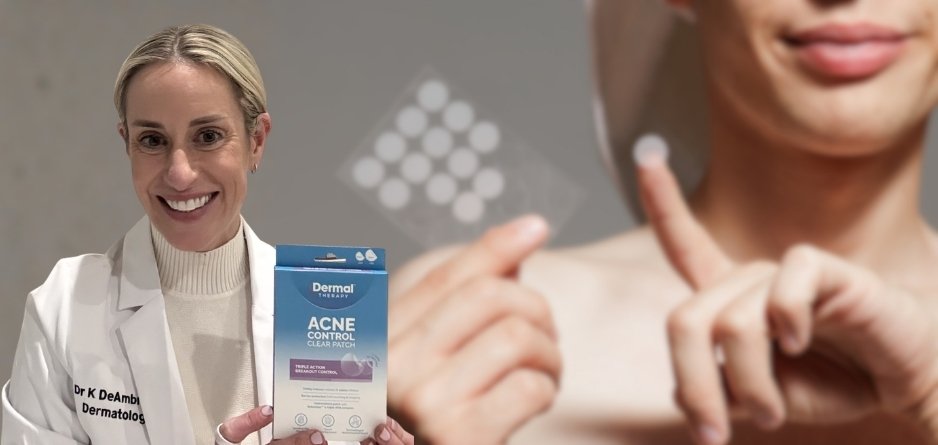
AcneWe’re excited to introduce Dr. Kate DeAmbrosis, a dermatologist who answers one of the most common skincare questions she gets asked. In the article below, Dr. DeAmbrosis breaks down exactly what pimple patches are made from, when they actually work, when they don’t, and how to use them properly – so you can make the most of them without wasting your time or money.
Key Takeaways:
- They Really Do Work – For the Right Pimple: Pimple patches are effective on surface-level pimples and whiteheads, but won’t do much for deep, cystic acne that hasn’t come to the surface.
- Hydrocolloid is the Hero Ingredient: Most patches are made from hydrocolloid – the same material used in wound dressings.
- Stopping Picking is Half the Battle: Even if a patch does nothing else, acting as a physical barrier against touching and squeezing is one of its biggest benefits – picking is a leading cause of inflammation, scarring and slow healing.
- Application Matters: Clean, dry skin is essential. Don’t apply creams or oils underneath the patch or it won’t stick or work properly.
- A Spot Treatment, Not a Full Acne Plan: Pimple patches help with individual pimples but don’t prevent new ones forming. They’re one useful tool – not the whole solution.
What are pimple patches and how do they work?
“You’ve probably seen them everywhere. Clear little stickers, cute star-shaped patches, overnight acne dots – and you might be wondering, are these just a TikTok trend or do they actually help? Well the good news is, yes, pimple patches can be useful but only for the right type of pimple and only if you use them properly.
Most basic pimple patches are made from something called hydrocolloid. That does sound very medical, but it’s actually the same type of material that we’ve used in wound dressings for a very long time. When you take the patch off, it can often look white or cloudy.
What are the benefits of using a pimple patch?
“One of the biggest benefits of pimple patches is they act like a physical barrier and honestly this might be the best part of these. If you’re someone who touches, squeezes, scratches or picks at pimples – and let’s be honest most of us have done that at some point – a pimple patch can stop your fingers from getting to the skin. That matters because picking is one of the biggest reasons pimples become more inflamed, take longer to heal and then leave behind marks or scars. So I often tell my patients, even if the patch does nothing magical, if it stops you from picking, it’s already helping.
Another benefit I find is that patches can reduce friction. So if you have a pimple on your chin or your cheek and it’s rubbing against your pillow or a mask or a helmet or makeup, the patch gives it a bit of protection. That can help to calm irritation while the skin is healing.
Pimple patches can also be a nice option for people who find acne treatments irritating. These plain hydrocolloid patches are genuinely quite gentle and can be a good low irritation option for individual spots.
Some pimple patches contain ingredients like AHAs, which can be really helpful for some people, especially to more rapidly shrink the pimple and accelerate healing.”
What type of pimple should I use a patch on?
“They work best on surface level pimples, especially whiteheads, the kind where you can see a little head forming. They’re less effective for deep, painful cystic pimples under the skin. If you have one of those big sore lumps that hasn’t come to the surface, a patch probably won’t do much. “
How do I use a pimple patch correctly?
“First, cleanse your skin and make sure the area is completely dry. Patches don’t stick well to damp or oily skin. Secondly, apply the patch directly over the top of the pimple – always using clean hands or tweezers to avoid introducing more bacteria to the area. Try not to put creams, oils or thick moisturisers underneath because that can stop the patch from sticking and working properly where it needs to. Thirdly, leave it on for a few hours or overnight depending on the instructions. When it turns white or it starts lifting at the edges, that usually means it’s ready to come off. Please don’t rip it off aggressively. Gently peel it away so you don’t irritate the skin.”
Are there any downsides or things to watch out for?
“Pimple patches are not a full acne treatment plan. They can help with individual pimples but they don’t prevent new pimples from forming.
Another thing I really like about them is they can help to make people feel more confident. Some of the clear patches are subtle enough to wear during the day and the colourful ones can make acne feel less embarrassing and more normal. I actually think that’s a positive thing. Acne is incredibly common and anything that reduces shame around it is a win.
But here’s what I don’t want you to do. Don’t put a patch over a pimple you’ve aggressively squeezed until it’s bleeding and then assume everything is fine. If the skin is very raw, crusted or swollen, you do need to be careful. A patch can protect the area but it doesn’t replace medical care if something’s getting worse.”
Dr. DeAmbrosis’s Expert Tips
“Pimple patches can be great for whiteheads and surface level pimples. They help to reduce picking. They’re generally safe, easy to use and a really useful addition to your skincare routine. But they won’t fix deep cystic acne, they won’t prevent acne on their own and they shouldn’t replace proper medical treatment if there’s persistent breakouts or scarring.
So yes, I am a fan of pimple patches when they’re used for the right reasons. And my final tip – the next time you feel tempted to squeeze a pimple, try putting a patch on it instead. Your future skin will thank you for it.”
Dermal Therapy Acne Control Clear Patch
Designed to do exactly what Dr. DeAmbrosis describes, the Dermal Therapy Acne Control Clear Patch creates the right environment for healing. Clear and discreet enough to wear during the day, and easy to apply over clean, dry skin.
Further Reading
Explore more expert acne content from Dermal Therapy:
- Acne Cream vs. Acne Lotion: Which One Works Better?
- Acne Q&A with Dr Phil Tong, Bondi Dermatologist and Fellow of the Australasian College of Dermatologists
- Acne Control That Works With Your Skin, Not Against It – Expert Insights
- Why Acne Doesn’t Stop in Winter – And How to Treat It Without Drying Out Your Skin
Pimple Patches FAQs