Athlete’s Foot: Signs, Causes and Treatment Options

Area
Wart & FungusKey Takeaways:
- Up to 25% of Australians will develop athlete’s foot, with athletes facing even higher infection rates (between 10% and 36%) due to intense friction and heat.
- Look for soggy white skin between the toes or red, scaly patches on the soles to distinguish tinea pedis from simple dry skin.
- Use Dermal Therapy Fungistop once daily for seven days to actively kill the fungal cells that cause tinea (athlete’s foot), using 1% terbinafine hydrochloride, rather than simply stopping fungal growth.
Up to 25% of Australians experience athlete’s foot at some point in life, often caused by hot, sweaty footwear and communal areas like pools. It’s a common skin condition that affects many of us, especially if we lead active lives. It’s caused by a group of fungi that love the warm, damp environment inside your shoes. While it can be frustrating and persistent, understanding what athlete’s foot is and how it spreads is the first step toward clear skin.
What does athlete’s foot look like?
Many people question what athlete’s foot looks like because it can vary from person to person. You’ll usually notice the first signs of tinea pedis between your toes or on the soles of your feet. Often, the skin will appear red, scaly, or flaky. In more severe cases, you might see small blisters, or the skin may begin to crack and peel.
Common athlete’s foot symptoms include intense itching, a stinging or burning sensation, and an unpleasant odour. If the skin between your toes looks white and soggy, that’s a classic sign of foot fungus.
What is athlete’s foot and how do you catch it?
Athlete’s foot is a fungal infection that thrives on keratin, which is the protein found in your skin. It belongs to a family of types of foot fungus known as dermatophytes. Because these fungi love moisture, they’re commonly found on damp surfaces like locker room floors and pool decks. Learn more about the science behind foot fungus in our expert commentary from Amit Saha, Head of Technical & Innovation at Dermal Therapy.
Is athlete’s foot contagious?
Yes, it’s highly contagious. You can pick it up by walking barefoot in public areas or by sharing socks and towels with someone who already has it. Once the fungus finds its way onto your feet, it quickly settles into the warm gaps between your toes.
The risk is even higher for those involved in sports and training. Elite athletes show 10-36% subclinical rates of infection, often carrying the fungus without realising it because of constant heat and friction in their footwear.
Can athlete’s foot spread to other parts of the body?
Yes, the same fungus that causes athlete’s foot can spread to your groin or your body if you touch your feet and then touch other areas. It’s also common for the infection to move into the nails. If you notice your nails becoming yellow or brittle, you may need a specific nail treatment alongside your athlete’s foot cream. Learn more in our Guide to Nail Fungus Treatment: Causes, Prevention, and Solutions.
How to get rid of athlete’s foot for good?
To get rid of athlete’s foot, you have to kill the fungus and keep your feet dry. Start by washing your feet daily with a gentle cleanser and drying them thoroughly, especially between the toes.
Switch to cotton socks and try to rotate your shoes so they have time to air out between wears. Using an antifungal cream for athlete’s foot is the most reliable way to clear the infection. Many people search for what kills athlete’s foot instantly. While nothing works in a literal second, high-quality treatments can start relieving symptoms on day one.
What is the best athlete’s foot treatment?
The most effective athlete’s foot treatment involves using a clinical-strength cream that targets the source of the infection. When you’re looking for an athlete’s foot cream, we recommend choosing one that contains 1% Terbinafine hydrochloride.
Many older creams only stop the foot fungus from spreading, but Terbinafine is different because it actually kills the fungal cells. This clinical-strength approach is a total game changer for tinea pedis. You can often clear the infection in just 7 days with once-daily use, while older creams can drag on for weeks.
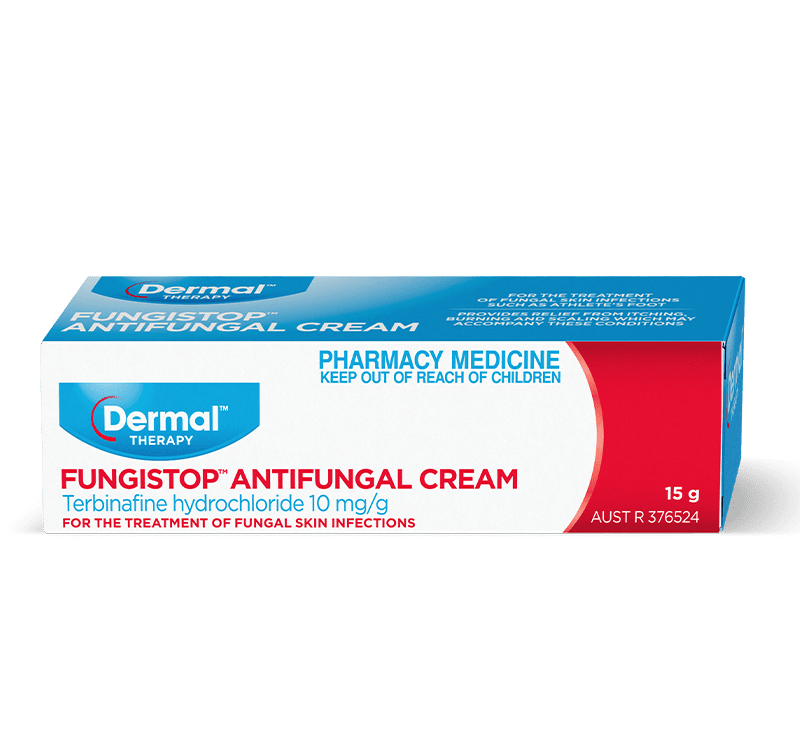
Dermal Therapy Fungistop Antifungal Cream is a powerful, 3-in-1 solution that provides fast relief from itching and burning while treating the underlying infection.
Why is Dermal Therapy Fungistop so popular in Australia?
Aussies trust this formula because it delivers clinical strength results without the hefty price tag. Dermal Therapy Fungistop Antifungal Cream has earned a 4.5-star rating from customers because it solves the root of the problem fast.
- 3-in-1 Action: One cream treats athlete’s foot, jock itch, and ringworm.
- Kills Fungus: The 1% Terbinafine hydrochloride actively destroys the fungal cells.
- Once Daily: You’ll only apply it once a day for a simple and manageable routine.
- Fast Relief: It’s designed to stop burning, itching, and scaling symptoms quickly.
- Podiatrist Recommended: Professionals suggest it as an effective over-the-counter athlete’s foot treatment.
How to treat athlete’s foot with Dermal Therapy Fungistop?
Knowing how to treat athlete’s foot correctly is just as important as the product you choose. To get the best results from your foot fungus treatment, follow these steps.
- Clean and dry the area thoroughly before application.
- Apply a thin layer of Fungistop Antifungal Cream to the affected skin and about 2cm of the healthy skin around it.
- If the infection is between your toes, you can cover the area with a small piece of gauze to keep it dry.
- Continue the treatment for the full seven days, even if the itching stops sooner.
Taking the next step for healthy feet
Don’t let tinea pedis hold you back from your active lifestyle. By catching the signs early and using a proven athlete’s foot treatment, you can get your feet back to their best in no time.
Explore Dermal Therapy Fungistop Antifungal Cream and find the reliable, fast-acting solution you need.
FAQs
.
The five most common symptoms of athlete’s foot (tinea pedis) include intense itching, a stinging or burning sensation, red scaly patches on the soles, cracked or peeling skin, and soggy white skin between the toes. Many sufferers also report a persistent, unpleasant foot odour as the infection develops.
To make athlete’s foot go away for good, you must kill the fungal cells and maintain a dry environment. A clinical-strength antifungal like Dermal Therapy Fungistop is highly effective because it uses 1% Terbinafine hydrochloride to actively destroy the fungus rather than just stopping its growth. For best results, apply the cream once daily for seven days and ensure feet are dried thoroughly after washing.
Athlete’s foot is triggered by exposure to dermatophytes, a fungi that thrives in warm, moist conditions. Common triggers include wearing non-breathable, sweaty footwear, walking barefoot in communal areas like gym showers or pools, and sharing contaminated towels or socks. High levels of friction and heat, common in active lifestyles, also increase the risk of an outbreak.
Athlete’s foot is often mistaken for simple dry skin, eczema, or psoriasis due to the presence of scaling and redness. However, if the irritation includes soggy skin between the toes or a distinct stinging sensation, it is likely tinea pedis. Using a targeted treatment like Dermal Therapy Fungistop helps provide relief from these specific fungal symptoms.